
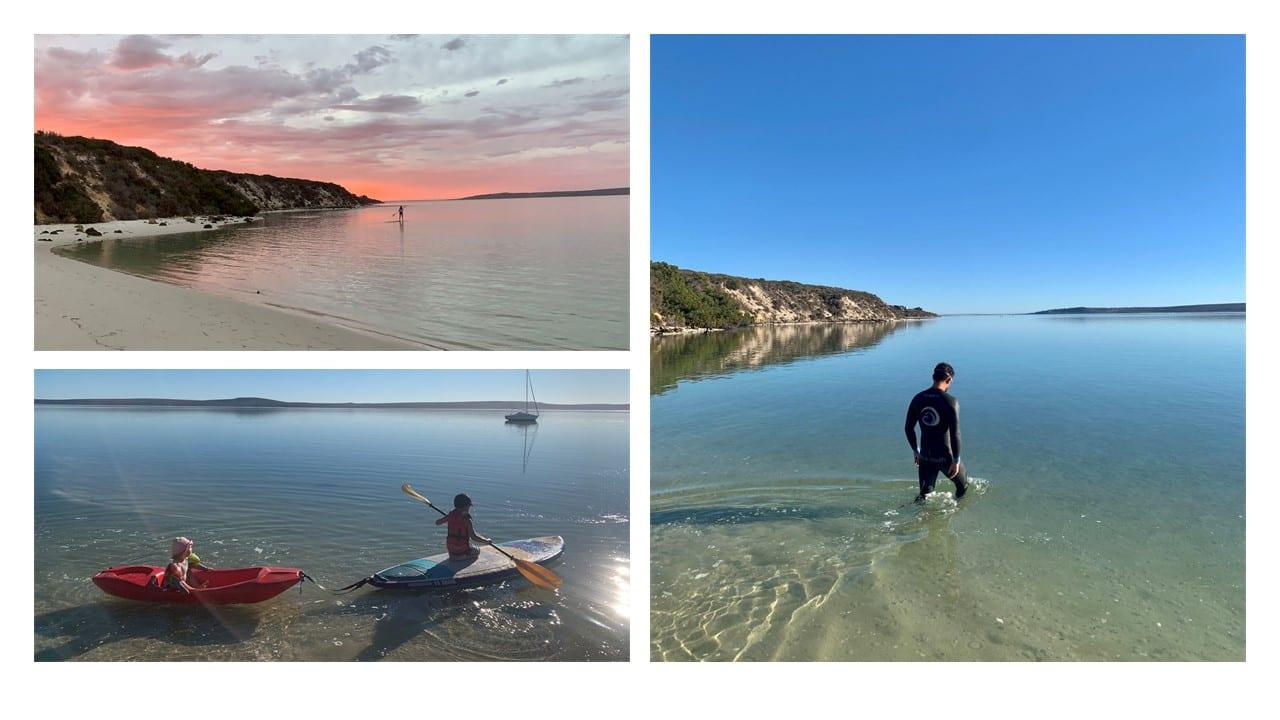
Dex recently championed an exciting, once-in-a-lifetime safari and conservation experience. Along with conservationists and wildlife relocation specialists, he traveled to Phinda in KwaZulu Natal to relocate a small herd of elephants. This "Tracking Silent Giants" trip was uniquely live-streamed exclusively to YPO members and families globally, with Dex being a member since 2008.
Should they stay or should they go?
Every ecosystem has saturation capacity for animals. Elephants consume approximately 200 kilograms of vegetation daily, requiring relocation to maintain environmental balance. Phinda Reserve, spanning 28,000 hectares with roughly 130 elephants at capacity, has relocated around 60 elephants previously, using annual contraceptive darting via helicopters.
Silent, sentient and super-smart
Despite their size, elephants are intelligent and secretive, hiding quickly and quietly. Phinda's elephants associate helicopters with contraceptive injections, making them wary. The capture team exercised caution to prevent elephants from hiding in dense sand forest.
Upon arrival at Rietvlei Nature Reserve in Limpopo province, the elephants adapted remarkably well. Rather than prior boma quarantine procedures, elephants are now released directly into the bush from transport trucks. Cohesive herds remain intact, as social dynamics ensure stable relocation. Within days, herds fully assimilate into new environments.
This expedition relocated 5 elephants, including a 35-year-old matriarch with her yearling calf. Four days post-relocation, one cow gave birth.
How to move Giants
Conservation Solutions, translocation specialists, conducted the operation. Over 25 years, they've successfully translocated over 4,000 elephants and rhinos, plus 100,000+ animals of varying species.
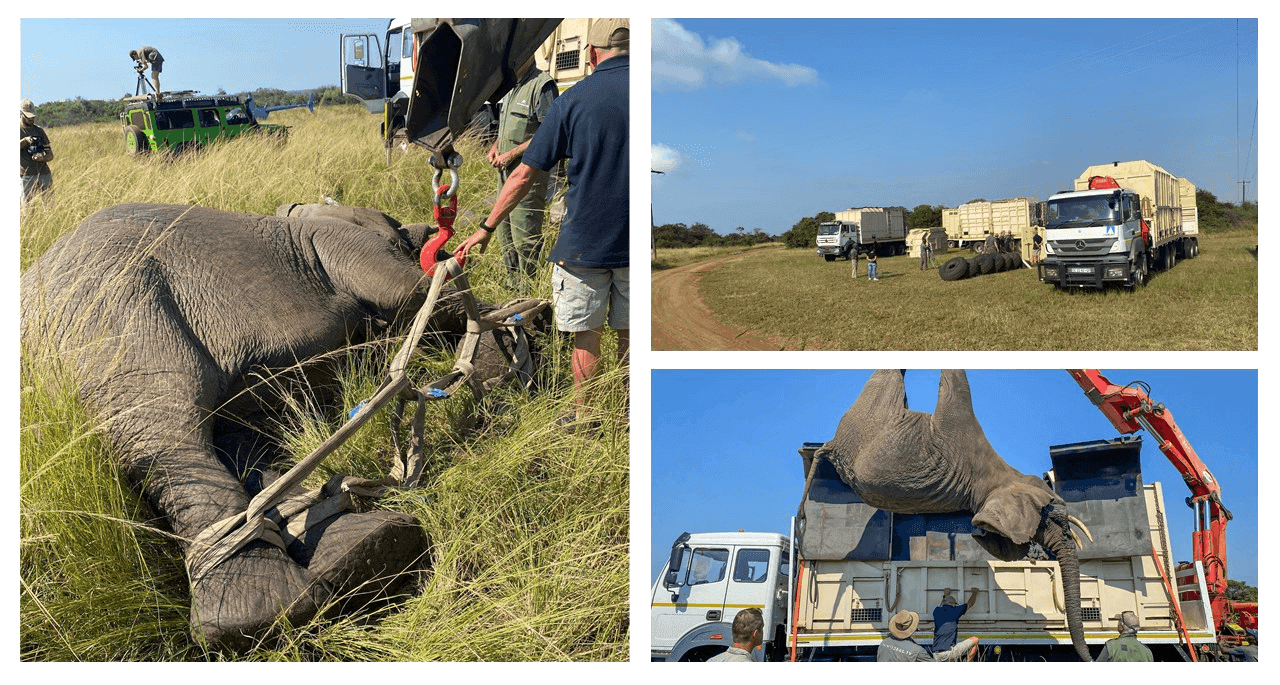
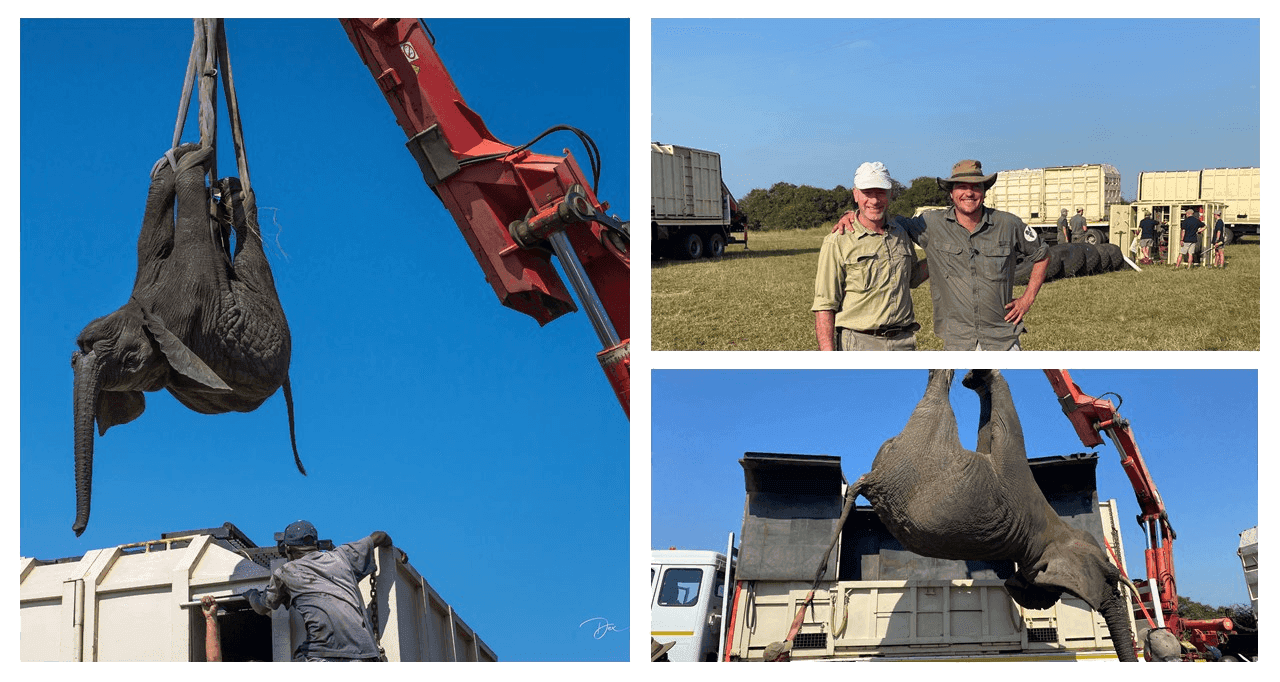
Helicopters locate elephants, keep them together, and drive them to safe capture areas. Fitted with hydraulic cranes, elephants are lifted by their feet with no adverse effects. Once darted and captured, elephants load into purpose-built recovery crates. They're immobilized briefly; faster cycles benefit the animals. Bull relocation proves difficult due to size, approximately 2.5 times larger than cows, requiring bigger equipment. Calves load after mothers and wake first, preventing maternal injury to sleeping young sharing crates.
The 800-kilometer, 24-hour transfer required constant veterinary monitoring.
A good time to be alive(stream)
While elephant relocations have been filmed previously, this marked the first live-streamed elephant relocation. The process ran 7am to 6pm, with approximately 3 hours of live coverage. Painted Dog TV, a virtual safaris and conservation company, documented the event. The filming logistics team arrived two weeks prior, verifying signal functionality. Co-hosts Dex and Brent Leo-Smith of Painted Dog provided real-time information to their global audience.
A sanctuary for sleep
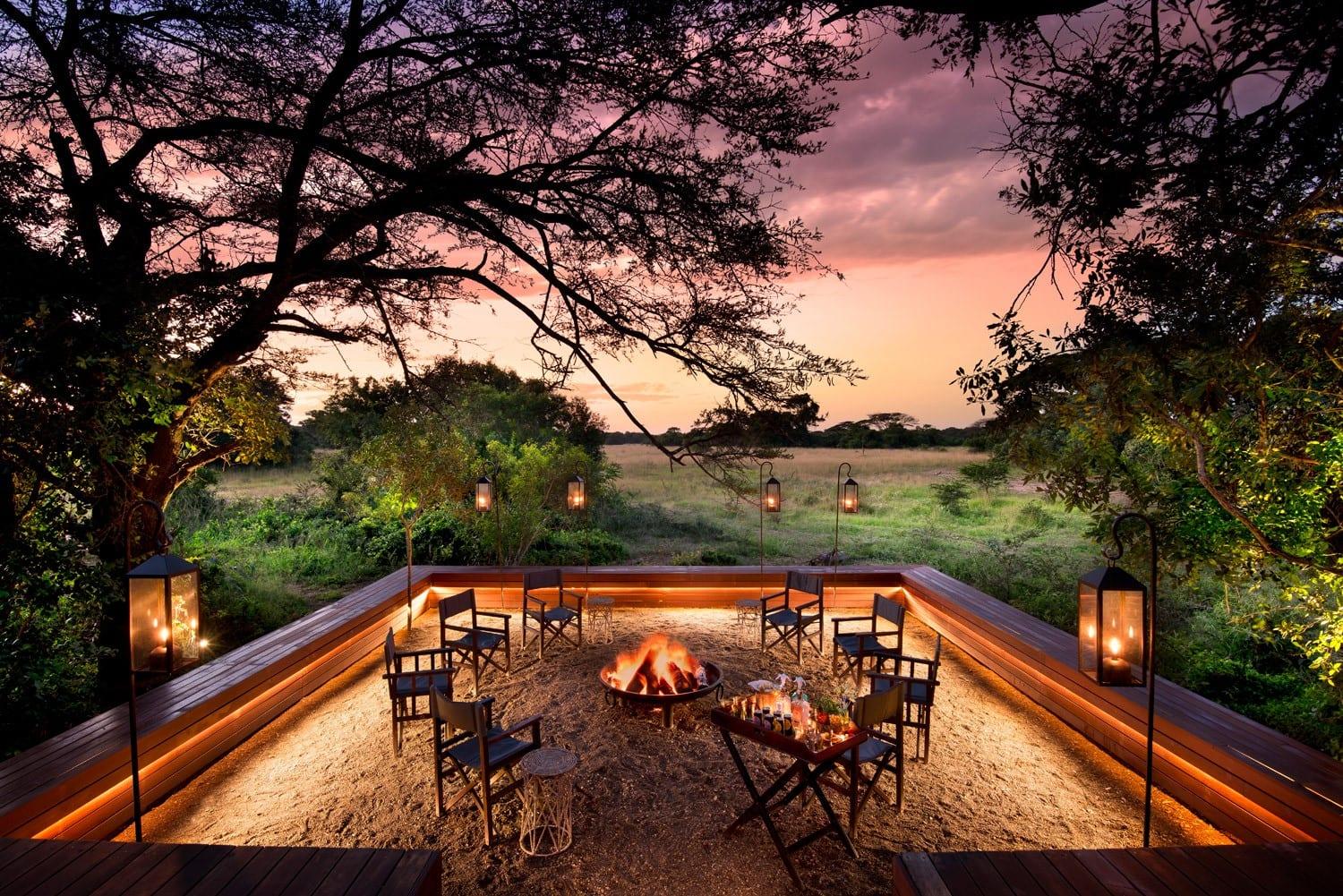
At day's end, the team rested at Phinda Vlei Lodge, an andBeyond luxury property where the Big 5 roam. This secluded, plantation-style hideaway sits on rare sand forest edges. Luxury suites overlook endless African plains, featuring private lap pools and outdoor showers. Wooden decks extend into African bushveld for wildlife viewing.
Beach Breakaway
Following the relocation excitement, Dex visited Sodwana Bay for one night, then stayed at Thonga Beach Lodge, a luxury establishment nestled between trees overlooking the Indian Ocean. Positioned just below Cosi Bay on KwaZulu Natal's North Coast, the lodge provides private beach access, world-class scuba diving and snorkeling, and pristine natural surroundings.
This elephant relocation operation represented major conservation success, restoring and maintaining natural balance while ensuring these majestic animals' longevity and health, reaffirming their passion for the natural world.