

Our Commitment
Conservation is not a marketing position
It is the reason we exist. Every safari we craft is designed to protect what we love — the wildlife, the wilderness, and the communities who call it home.
“Conservation is not something we add to our safaris. It is why we build them. Every guest who travels with us becomes part of the solution.”
Conservation in the field
An elephant collar keeps working long after the field team has gone home. Over the seasons that follow, it can show which routes an elephant takes when water dries up, where it crosses a reserve boundary and where it comes into contact with people. That knowledge can help keep those routes open for future generations, and reduce conflict between elephants and the people who live alongside them.
The Four C’s
The Four C’s guide which camps, guides and experiences we choose, and how we plan each journey.
Community
We look for operators that hire and train locally, buy from local suppliers and involve communities in decisions that affect them.
Conservation
We look at what a camp or operator does to protect wildlife and habitat. Where it fits the journey, we arrange time with field teams, on their terms.
Culture
We make room for people to share their own histories, knowledge and ways of life, in the ways they choose.
Commerce
We choose tourism businesses that sustain jobs, pay local suppliers fairly and keep investing in the places guests come to see.
How we operate
From intern to scientist
In 2012, Dex conceived a conservation internship for the young adult children of YPO members, known within YPO as the Young Next Generation. It grew into Youth 4 African Wildlife, a registered non-profit. By 2024, around 88 interns had taken part, using photography, film and social media to document poaching and tell the stories of the people working to stop it.
In 2014, the programme organised sponsorship for Fortunate Mafeta Phaka, a young conservationist from rural Limpopo. He went from intern to project leader, then project director, and later joined the organisation’s board. In 2022, he completed a joint PhD in Environmental Sciences and Biology through North-West University and Hasselt University in Belgium. Today, Dr Phaka is a senior lecturer at North-West University, researching the relationship between South Africa’s frogs and reptiles and the cultures of the people who live alongside them.
In the field
Conservation from Kruger to the Coral Triangle
Dex first designed conservation internships for young people on a simple premise: people protect what they have seen for themselves, and the younger they see it, the longer it stays with them. The same thinking shaped the expeditions that followed, as the field trips grew from young interns to whole families, and from the Greater Kruger to Indonesia’s Coral Triangle.
In 2017 and 2018, Dex and Annie brought YPO families into the field with YPO Tracking the Silent African Giants, their first expedition together. The series continued in Mozambique in 2019 with YPO Elephants, Beaches and Turtles.
In 2021, Dex joined the Planet Action Network, one of YPO’s four impact networks, which focuses on climate action, life below water and life on land. He has served on its Exco since then and became Chair in July 2026.
In February 2025, Dex hosted 30 YPO members and partners in Raja Ampat for the Planet Action Network, where they spent a week learning from marine biologists and local conservationists. It was the flagship event of the network’s 2024–25 learning programme, which received YPO’s Best of the Best Network Learning Program award. The next Planet Action expedition in the Coral Triangle is planned for July 2027 in Komodo National Park.
Photography runs through all of Dex’s work, from the interns’ films to his own wildlife images. He served two years as Learning Officer and two years as Chair of YPO’s Photography Subnetwork, and from 2024 to 2026 helped organise and deliver the YPO Photographer of the Year competitions.
A line we will not cross
What we will never book
- Canned or captive-bred hunting
- Lion walks and cub petting
- Captive-wildlife interactions dressed up as sanctuaries
- Facilities whose business model exploits animals for photos
Our refusals are as important as our choices. We tell guests plainly which sanctuaries and orphanages are legitimate, and we will not sell what we would not buy ourselves.
Who we work with
Our partners
Eight organisations, each led by people we know personally, and each putting every rand or dollar into the field.
Southern Africa
Youth 4 African Wildlife
Founded by Dex Kotze in 2013, Y4AW recruits young African conservationists and puts them to work in the field, then tells their stories through film and social to build a wider public voice for wildlife.

South Africa
The Rhino Orphanage
The first non-commercial rhino orphanage in the world. Founded in 2012 by Arrie van Deventer, dedicated to raising orphaned rhino calves for release back into the wild.

South Africa
Blood Lions
The 2015 feature documentary that exposed South Africa's captive lion industry, and the campaign it grew into. Safari Giants shares its goal of ending canned hunting and cub-petting tourism.

South Africa
Elephants Alive
Founded by Dr Michelle Henley in 2003, Elephants Alive is the longest-running elephant research programme in the Greater Kruger. Their motto: Science and Survival.

Rwanda
Aegis Trust
A conservation page is also a page about people and place. Aegis works to prevent genocide and build peace, and in Rwanda that work is inseparable from the landscapes we send guests to.
Kenya
Tsavo Trust
A field-based conservation partner in the Tsavo Conservation Area, working in partnership with the Kenya Wildlife Service and Save The Elephants to protect the last of Africa's Big Tuskers.

East & Southern Africa
Endangered Wildlife Trust
A pan-African conservation NGO working across nine Strategic Conservation Landscapes in East and Southern Africa, from the Drylands to the Drakensberg and the Kavango-Zambezi.

Indonesia
Thrive Conservation
A women-led Indonesian non-profit, founded in 2020, backing young Indonesians working on the environmental issues most often overlooked, on land and in the ocean.
Outcomes in the field
What we’ve helped fund
Over a decade of safaris, expeditions and fundraising with the partners above — three areas where it has translated into work on the ground.
Monitoring
Elephant and wild dog monitoring
The conservation safaris Dex and Annie organised for YPO members and their families helped fund 28 GPS collars for Elephants Alive. The funding covered the collars, veterinary and flight costs, and four years of monitoring. Elephants Alive, led by Dr Michelle Henley, grew out of the South African research programme of Save the Elephants, the Kenyan organisation founded by Iain Douglas-Hamilton. We’ve also sponsored African wild dog collaring through the Endangered Wildlife Trust.
Rhino
Rhino protection and rehabilitation
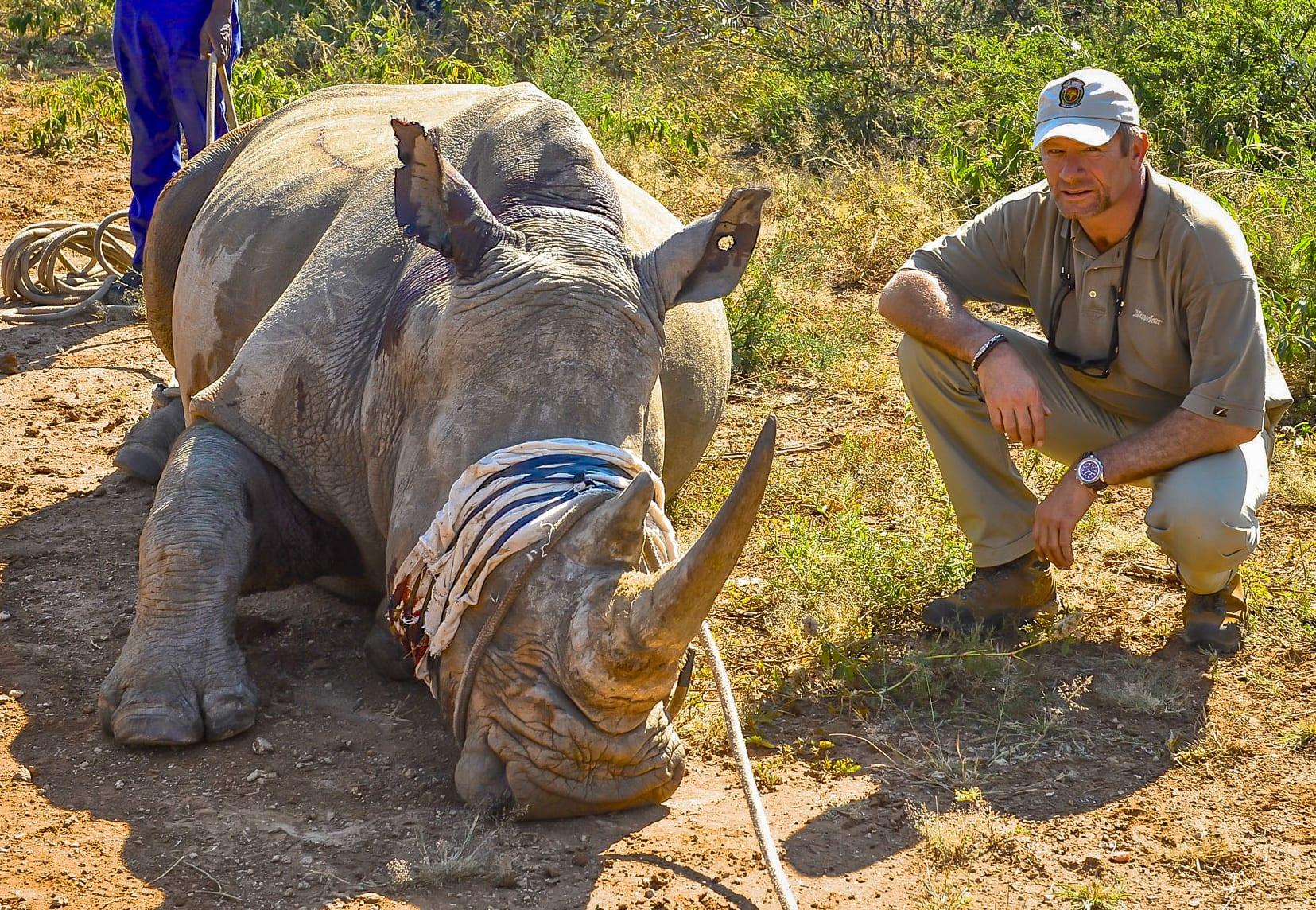
Through his previous business and Youth 4 African Wildlife, Dex helped sponsor the translocation of eight rhinos from South Africa to Botswana. In 2014, he raised R500 000 for StopRhinoPoaching.com, which paid for tracking dogs, equipment and training. Dex has served on the board of The Rhino Orphanage since 2013 and has chaired it since 2018. In 2022, the orphanage moved more than 30 young rhinos to a new home in Limpopo, an operation that took six weeks.
Advocacy
Anti-poaching, advocacy and peace education
Our work has brought us alongside the Black Mambas, an anti-poaching unit in the Greater Kruger, and Blood Lions, which campaigns against canned hunting and the commercial exploitation of captive lions. From 2014 to 2016, Dex was one of the lead strategists for the Global March for Elephants and Rhinos, helping develop a media campaign that reached more than 500 million people. In Rwanda, we support the Aegis Trust, which works with genocide survivors and advances remembrance and peace education. Annie has led several groups to see that work first-hand. We also donate to several non-profits, including the Aegis Trust, the Endangered Wildlife Trust and The Rhino Orphanage.

Travel with purpose
Travel in a way that leaves something behind
Tell us where you want to go. We will show you what your safari can carry.