
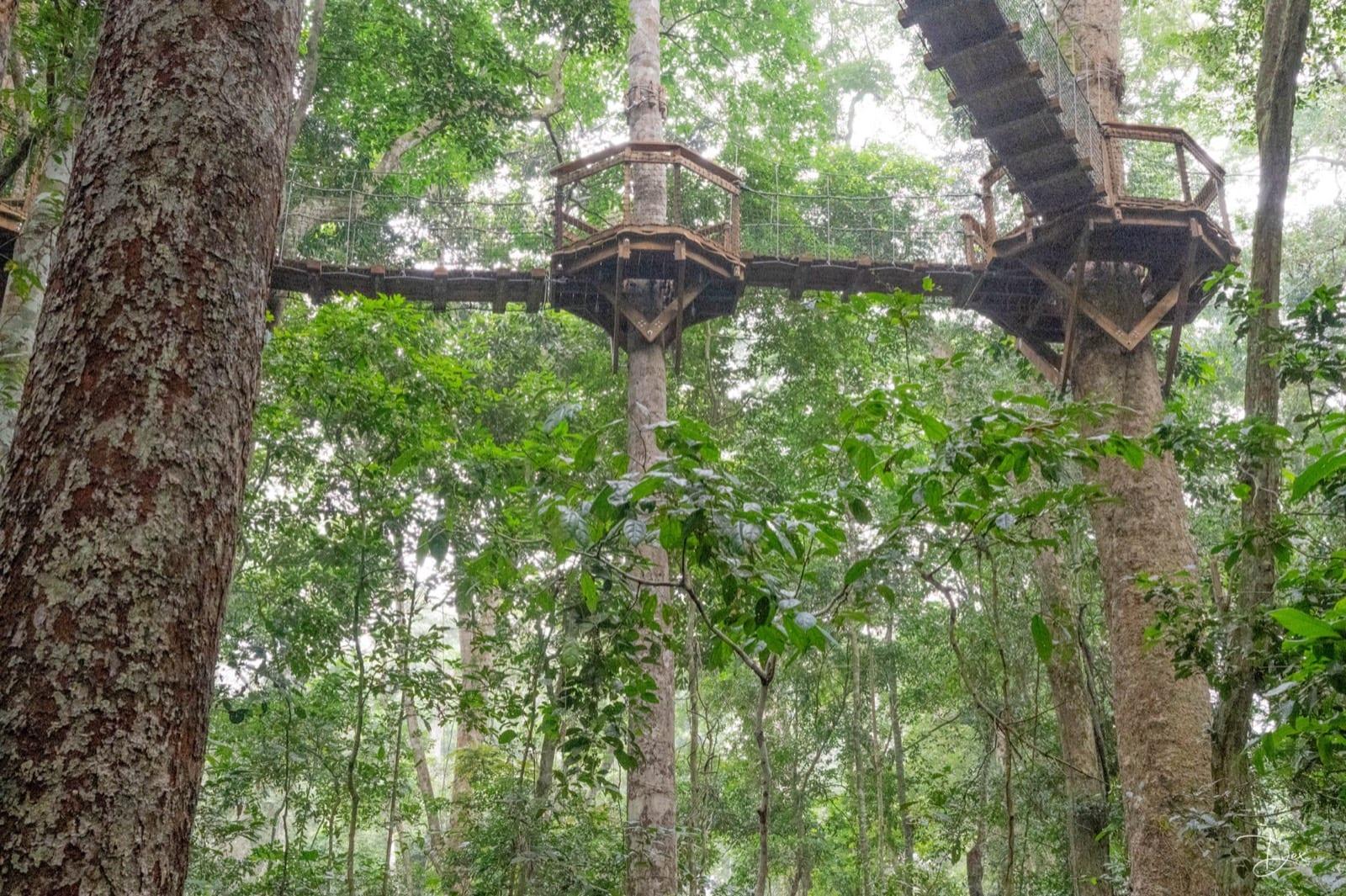
Is the Congo Amazing? Absolutely. Is it for everyone? Definitely not.
Mention "the Congo" and many people immediately think of conflict, Ebola and humanitarian crises. Yet one of Central Africa's greatest misconceptions is that there is only one Congo.
In fact, there are two. The Republic of Congo, often called Congo-Brazzaville after its capital, lies on the western bank of the mighty Congo River. Across the water is the Democratic Republic of Congo (DRC), with its capital, Kinshasa. The two cities face each other across the river, making them the closest pair of national capitals in the world.
It is the DRC that dominates international headlines. Ongoing conflict in its eastern provinces and periodic Ebola outbreaks have shaped global perceptions of the region. While these outbreaks are serious public health events, they have been confined to parts of the DRC and should not be confused with the Republic of Congo, a separate country with its own history, politics and identity.
That distinction matters because Congo-Brazzaville is one of Africa's least-visited destinations, and one of its most rewarding. Here, the world's second-largest rainforest stretches to the horizon, lowland gorillas roam ancient forests, and the Congo River remains the lifeblood of communities much as it has for centuries.
Overshadowed by its larger neighbour, the Republic of Congo rarely makes the news, yet it offers travellers something increasingly rare: vast wilderness, remarkable biodiversity and a sense of genuine discovery. It is the quieter Congo, where the rhythm of life is dictated by rivers and rainforest rather than headlines.
To journey into the Congo Basin is to leave behind the misconceptions and encounter a country that has been hidden in plain sight.
It is with this backdrop in mind, that myself, my business partner, Dex Kotze and 3 guests travelled to explore the Congo Basin in June.
Brazzaville revealed itself slowly, one delightful surprise after another. After breakfast, we met our charismatic guide, Dan, whose infectious enthusiasm made the city come alive. Our first stop was a striking tiled mural depicting the history of the Republic of Congo, a reminder that this nation has quietly charted its own course since independence. Politics has been dominated by President Denis Sassou Nguesso, who has led the country for most of the past four decades, first from 1979 to 1992 and again since 1997, making him one of Africa's longest-serving leaders.
From there, we plunged into Brazzaville's colourful markets. Bolts of vibrant pagne (wax-print) fabric spilled from tiny shops, and Dan encouraged each of us to choose a favourite, promising it would later be transformed into a bespoke shirt or outfit by a local tailor. It was a thoughtful touch that turned a souvenir into a lasting memory.
The sprawling Poto-Poto Market was an assault on the senses. Overflowing with everything from tropical fruit to household goods, it also offered a stark glimpse into local life, where bushmeat is still sold. A confronting but important reminder that travel sometimes means stepping outside your comfort zone.
Lunch at Wata Mati brought welcome respite: succulent river prawns served with sweeping views across the Congo River to Kinshasa, the skyline of the Democratic Republic of Congo shimmering just opposite. A stop for artisanal sorbet, crafted from local fruits we'd never encountered before, provided a refreshing interlude before the day's grand finale.
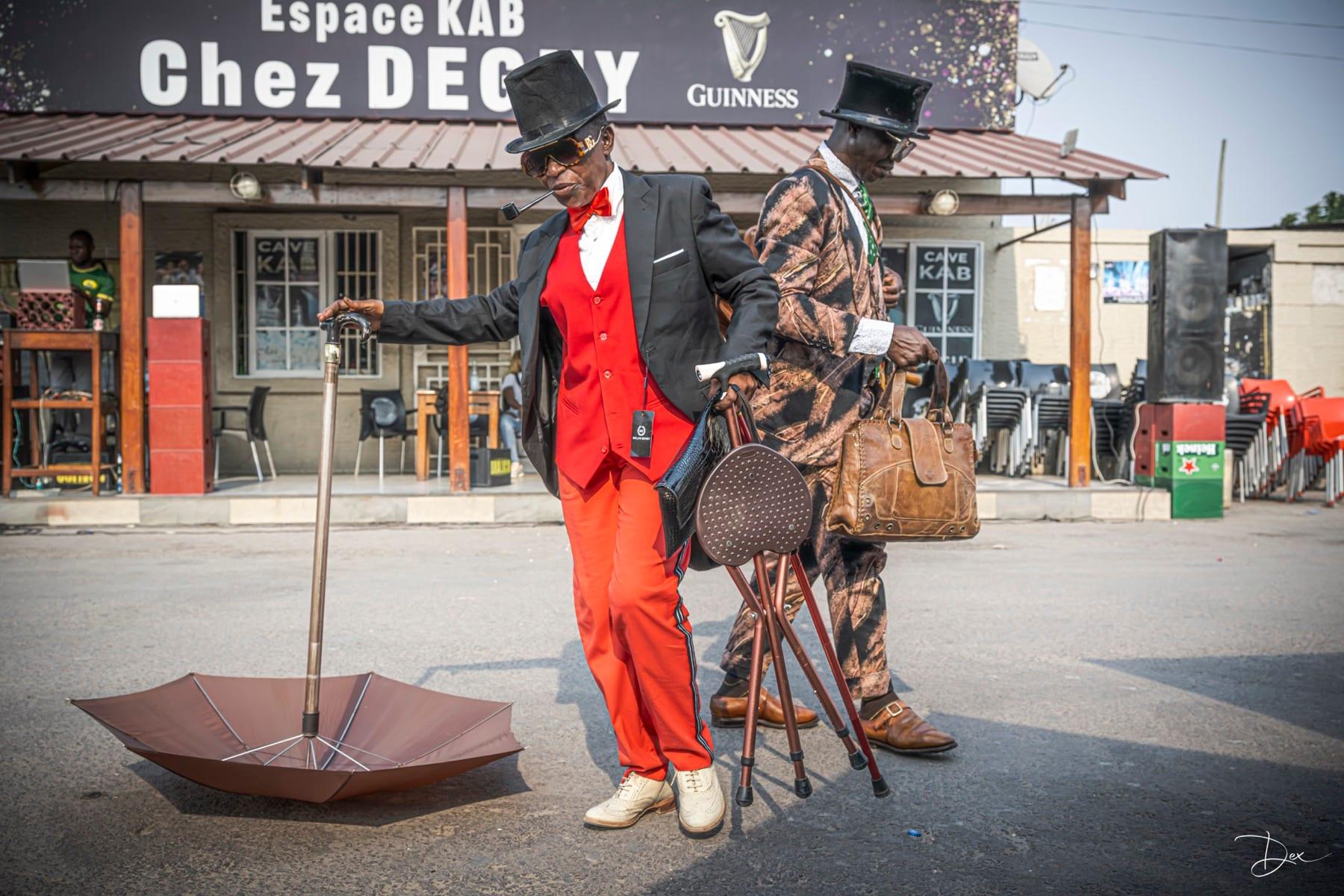
Nothing, however, prepared us for the Sapeurs. Immaculately dressed in dazzling suits, polished shoes and flamboyant accessories, these style icons danced, posed and performed with effortless charm. Equal parts fashion, theatre and joie de vivre, they swept us into their world and before long, we were dancing alongside them.
That evening, dinner at Le Jardin les Saveur was a fitting finale. Elegant yet unpretentious, the restaurant showcased refined Congolese cuisine, blending fresh local ingredients with French culinary influences, an apt reflection of Brazzaville itself.
The next morning, leaving Brazzaville behind, we boarded Kamba's 12-seater aircraft for the two-hour flight into the heart of the Congo Basin. Soon, roads gave way to an endless emerald canopy stretching to every horizon. After a surprisingly delicious in-flight lunch from the famous Paul's deli, we bumped onto a grassy airstrip where chilled drinks, smiling guides William and Damien, and our tailor were waiting. The colourful fabric we'd chosen the day before had already made its way into the rainforest, ready to be transformed into bespoke shirts and dresses by the end of our stay, a wonderfully personal touch that perfectly captures Kamba's attention to detail.
The three-hour drive to Ngaga Lodge was an adventure in itself. Heavy rain and a stranded vehicle forced us onto an abandoned forest track, where our guides literally hacked a path through the jungle with machetes before we emerged, soaked but exhilarated, at camp. Hidden beneath the towering rainforest canopy, Ngaga is the very definition of understated luxury. Don't expect marble bathrooms or coffee machines; instead, think steaming flasks of fresh coffee, comfortable beds draped in mosquito nets, hot showers, thoughtful eco-friendly touches and a warm welcome that immediately makes you feel at home. There is no Wi-Fi in the rooms, only in the communal lodge, and before long, I realised that was part of the magic. The rainforest quickly becomes your entertainment.
Meeting the Gorillas of Ngaga
Life at Ngaga settles into a gentle rhythm. Days begin before dawn with coffee and a light snack before setting off on foot to find one of the habituated western lowland gorilla families. Treks are limited to just four guests per group, creating an intimate, uncrowded experience. Good waterproof hiking boots, lightweight long trousers, a long-sleeved shirt and a rain jacket are essential, while binoculars are invaluable for spotting wildlife high in the canopy.
Western lowland gorillas are smaller and more elusive than their mountain cousins, inhabiting the dense rainforests of Central Africa. Critically important to the health of the Congo Basin, they disperse seeds through the forest and help regenerate one of the planet's greatest carbon sinks. Sadly, habitat loss, poaching and disease have caused dramatic population declines, making every encounter feel like an extraordinary privilege.
Unlike mountain gorilla trekking, Ngaga's trails are relatively gentle, winding through towering trees and dense Marantaceae undergrowth, the gorillas' favourite food. After about an hour's walk, we found Jupiter and his family feeding high in the trees before the magnificent silverback descended, briefly crossing our path with two adults in tow. Time seemed to stand still. The following morning brought an equally unforgettable encounter when Neptune's family unexpectedly met neighbouring Pluton, triggering a brief display of chest-beating and posturing before the rival group melted back into the forest.
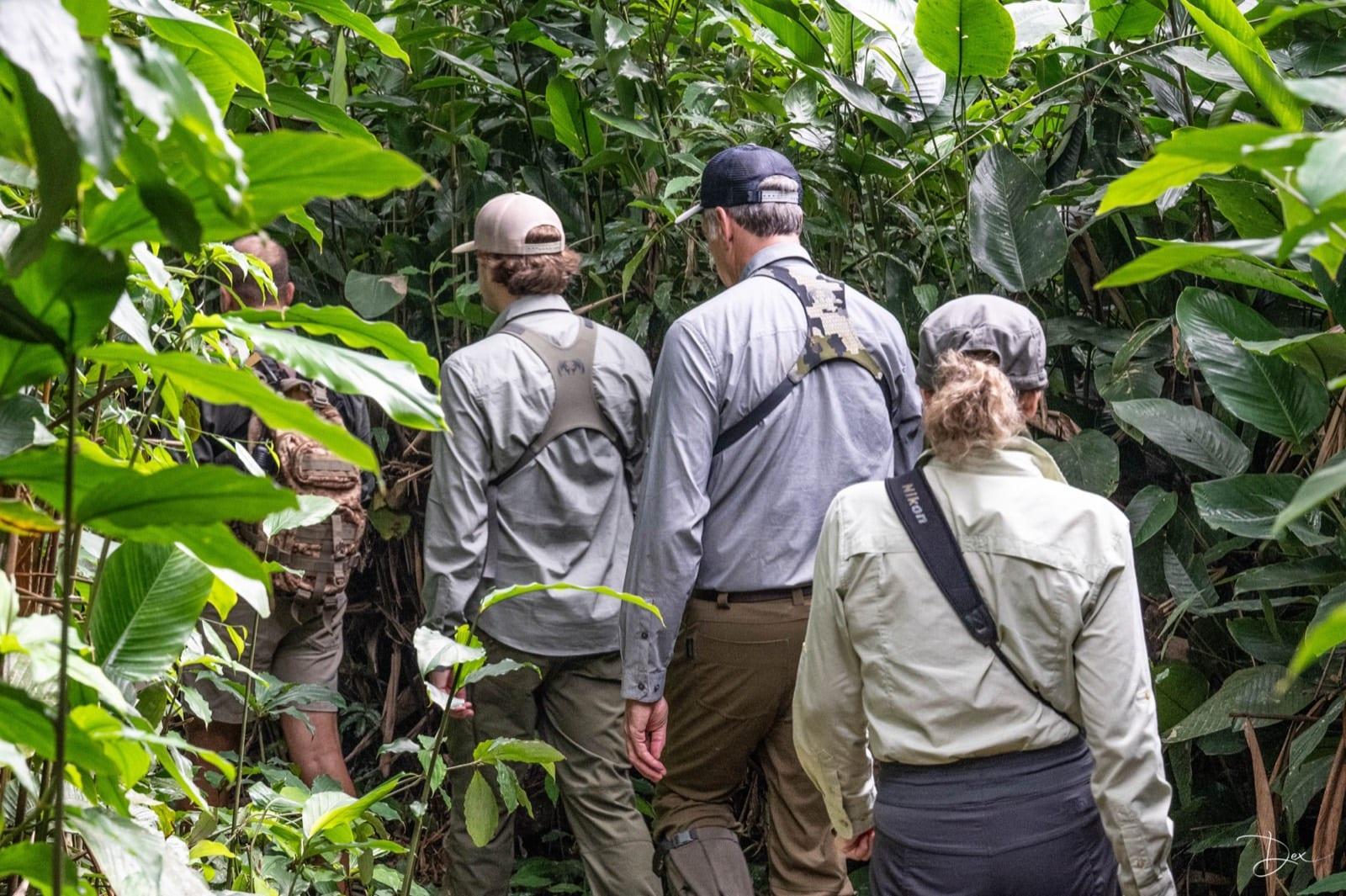
Afternoons are wonderfully unhurried. One day we explored by vehicle before gathering around a crackling campfire for sundowners beneath a blazing African sunset. Another afternoon, we wandered silently through the rainforest, learning about medicinal plants, insects and towering hardwoods before enjoying drinks in the middle of a forest stream. As darkness fell, a night walk revealed bush babies, spiders and insects, and when our torches were switched off, the rainforest became so profoundly black that it was impossible to see a hand in front of my face, a humbling reminder that, here, nature is entirely in charge.
Throughout our stay, chef Kamano produced one inventive meal after another, combining local fruits, vegetables and flavours into dishes that were every bit as memorable as the wildlife. Together with William, Damien and lodge manager Dewald, the Kamba team created something far more meaningful than a safari. They created the feeling of being welcomed into one of Africa's last great wildernesses.
Walking with Forest Elephants
After three unforgettable nights at Ngaga, the rainforest slowly gave way to open savanna as we made our way to Mboko Lodge. Here, the landscape changes dramatically. Endless grasslands stretch towards the horizon, while ribbons of gallery forest trace the winding Lekoli River, hinting at the wilderness that lies beyond.
From Mboko, the journey to Lango Camp is part of the adventure. We slipped quietly into kayaks and paddled downstream, the only sounds the dip of our paddles and the calls of birds hidden high in the palms. African grey parrots flashed overhead, black-and-white colobus monkeys bounded through the canopy, and the river carried us effortlessly deeper into one of Africa's most pristine ecosystems. Eventually, we left the river behind, pulling our kayaks onto a sandy bank before setting off on foot through the famous bais.
Before arriving, I'd wondered what it would feel like to spend hours walking through flooded forest. Would the water be cold? Would my boots survive? Should I wear sandals? The reality was far simpler. Quick-drying hiking clothes, old lace-up walking shoes and a waterproof backpack were all that was needed. The warm, tea-coloured water rarely rose above our knees, and within minutes any worries disappeared. Walking through the bais became one of the highlights of the journey.
These forest clearings are among the Congo Basin's greatest natural treasures. Rich in minerals that lie beneath the swampy soils, they act as enormous wildlife magnets, drawing animals from miles around to replenish essential nutrients missing from their forest diet. Every walk felt different. Forest buffalo stood watching us curiously from the reeds, colourful birdlife filled the skies, and every bend held the promise of something extraordinary.
Lango itself feels as though it has grown organically from the landscape. Raised on wooden walkways overlooking the bai, the lodge offers front-row seats to one of Africa's greatest wildlife spectacles. As darkness fell each evening, we could hear forest elephants emerging silently from the surrounding forest to feed on the mineral-rich soils below camp. We fell asleep to regular trumpeting of elephants throughout the evening.
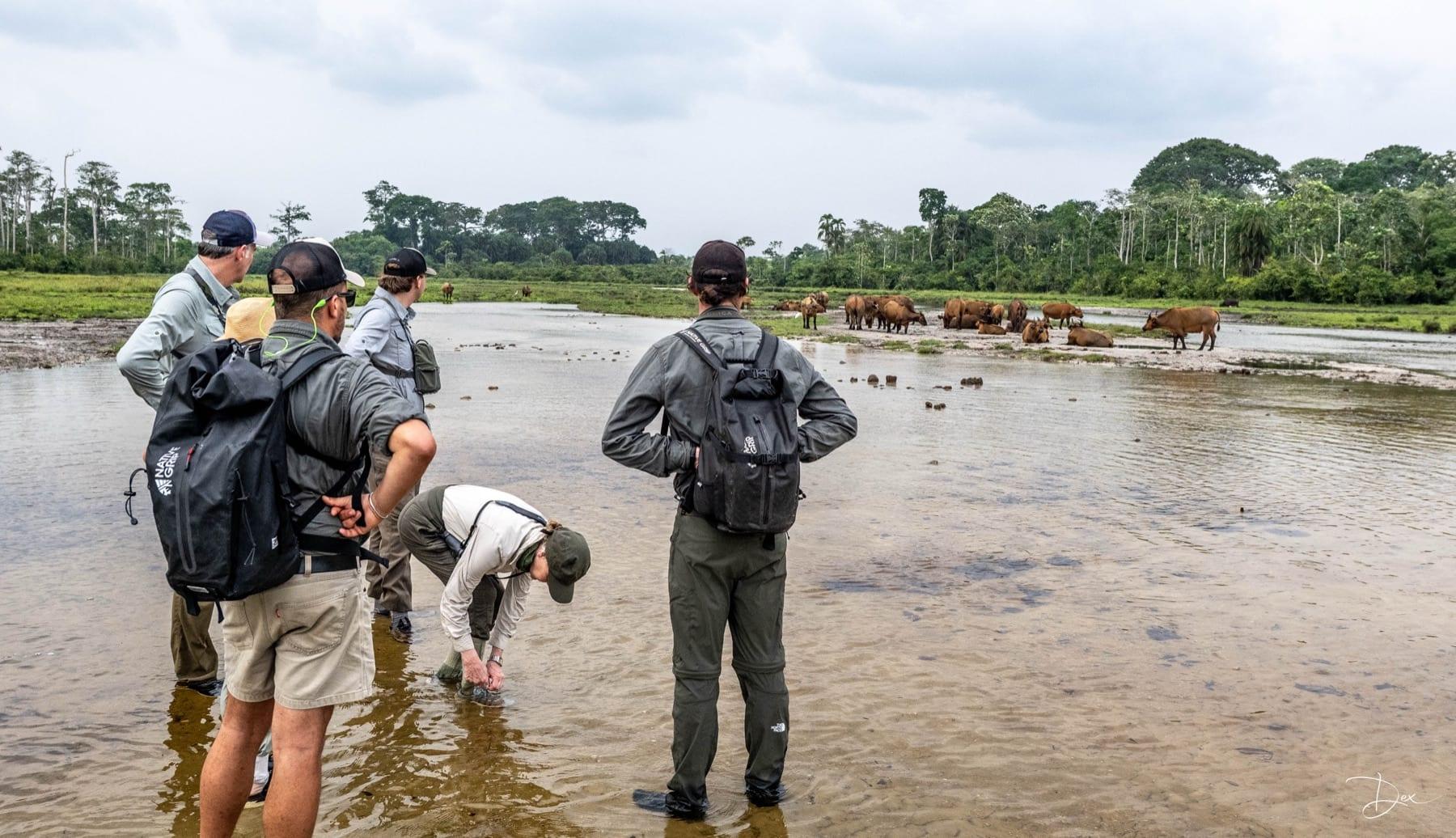
Life at Lango settles into an easy rhythm. Early mornings begin before sunrise, when the cool air offers the best chance of finding wildlife before the heat of the day. Unlike a traditional safari spent in vehicles, these adventures unfold entirely on foot. Led by the exceptional William and Damien, we wandered quietly through swamp, forest and open clearings, learning to slow down and notice the details: fresh tracks in the mud, birdsong drifting through the canopy, medicinal plants and ancient trees that have stood for centuries.
Then, almost without warning, the forest rewards your patience.
One unforgettable afternoon brought us a series of extraordinary encounters with forest elephants. Our first sighting was of a pair in the distance, and after watching them quietly for a while, we wisely retreated. As we continued, we became aware of another group moving through the bai alongside us. Although we never caught sight of them, we could hear the unmistakable sounds of bodies sloshing through the water and vegetation. It was only later that the camp manager told us there had been nine elephants in that hidden herd. Then came the encounter we will never forget. A magnificent bull stepped silently from the forest directly onto our path. We froze as he paused, raised his trunk to test the air, and considered us for what felt like an eternity before deciding to turn away from us to continue along the bai. Had a forest buffalo not delayed us just minutes earlier, our paths would almost certainly have crossed at much closer quarters. It was a powerful reminder that this is their world, not ours.
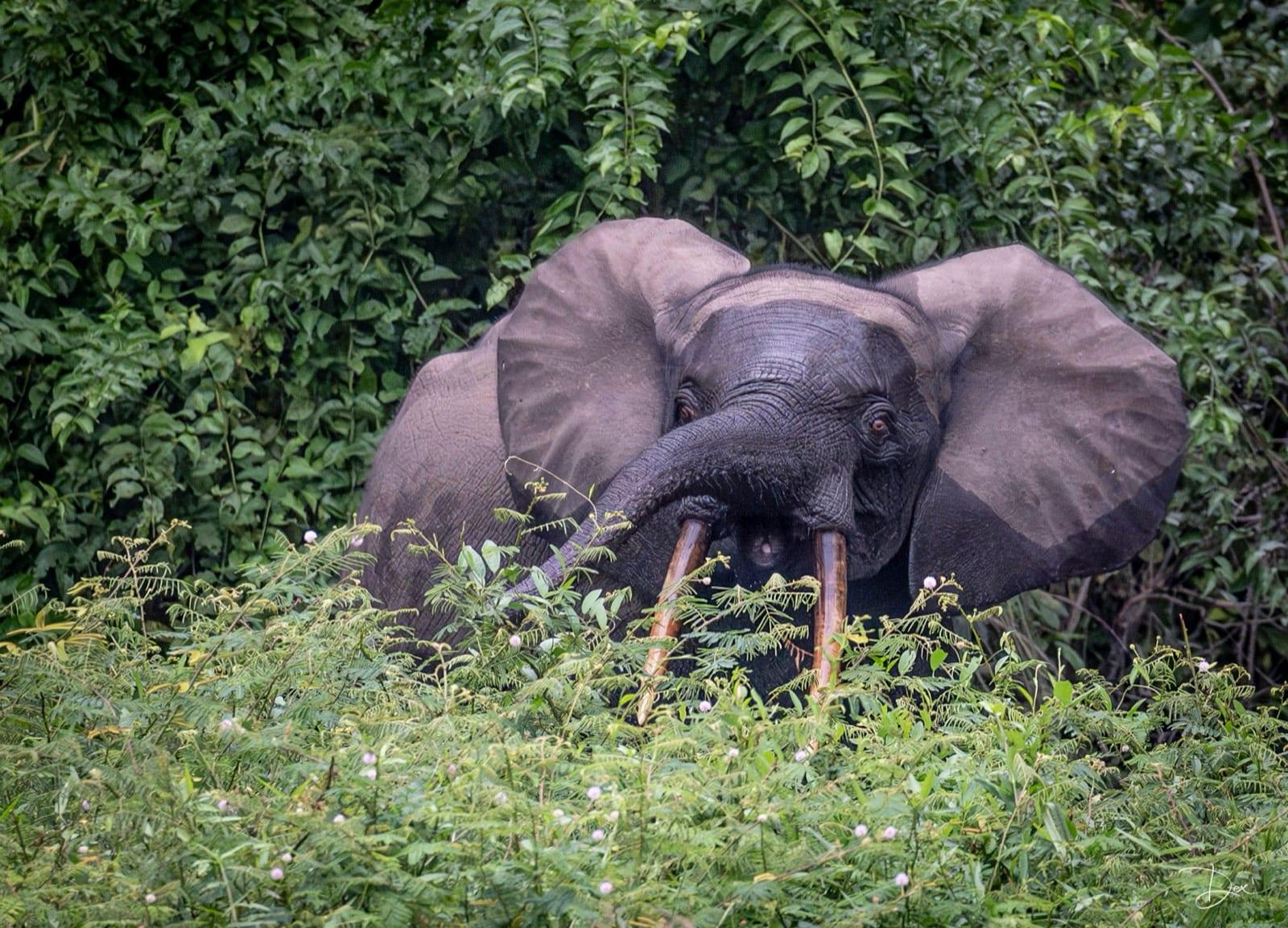
Forest elephants are among Africa's most endangered large mammals. Smaller than their savanna cousins, they spend almost their entire lives beneath the rainforest canopy and are rarely seen. Decades of ivory poaching and habitat loss have caused catastrophic population declines across Central Africa. Yet they remain the master gardeners of the Congo Basin, dispersing seeds over vast distances and helping regenerate one of the world's most important rainforests. To encounter one on foot, at eye level and entirely on its terms, is a privilege few travellers will ever experience.
The days unfolded beautifully: leisurely brunches after morning walks, afternoons exploring different corners of the bai, evenings around the campfire swapping stories before another inspired meal showcasing Congolese flavours and local ingredients. One night, a short drive rewarded us with spotted hyena cubs lounging in the road beneath the stars. On our final morning, our walk became less about searching for wildlife and more about absorbing the extraordinary place around us. Ancient pottery fragments scattered across the forest floor hinted that people had lived here for thousands of years, long before these forests became one of Africa's last true wildernesses.
Leaving Lango felt like leaving another world altogether.
The Lekoli River and Mboko
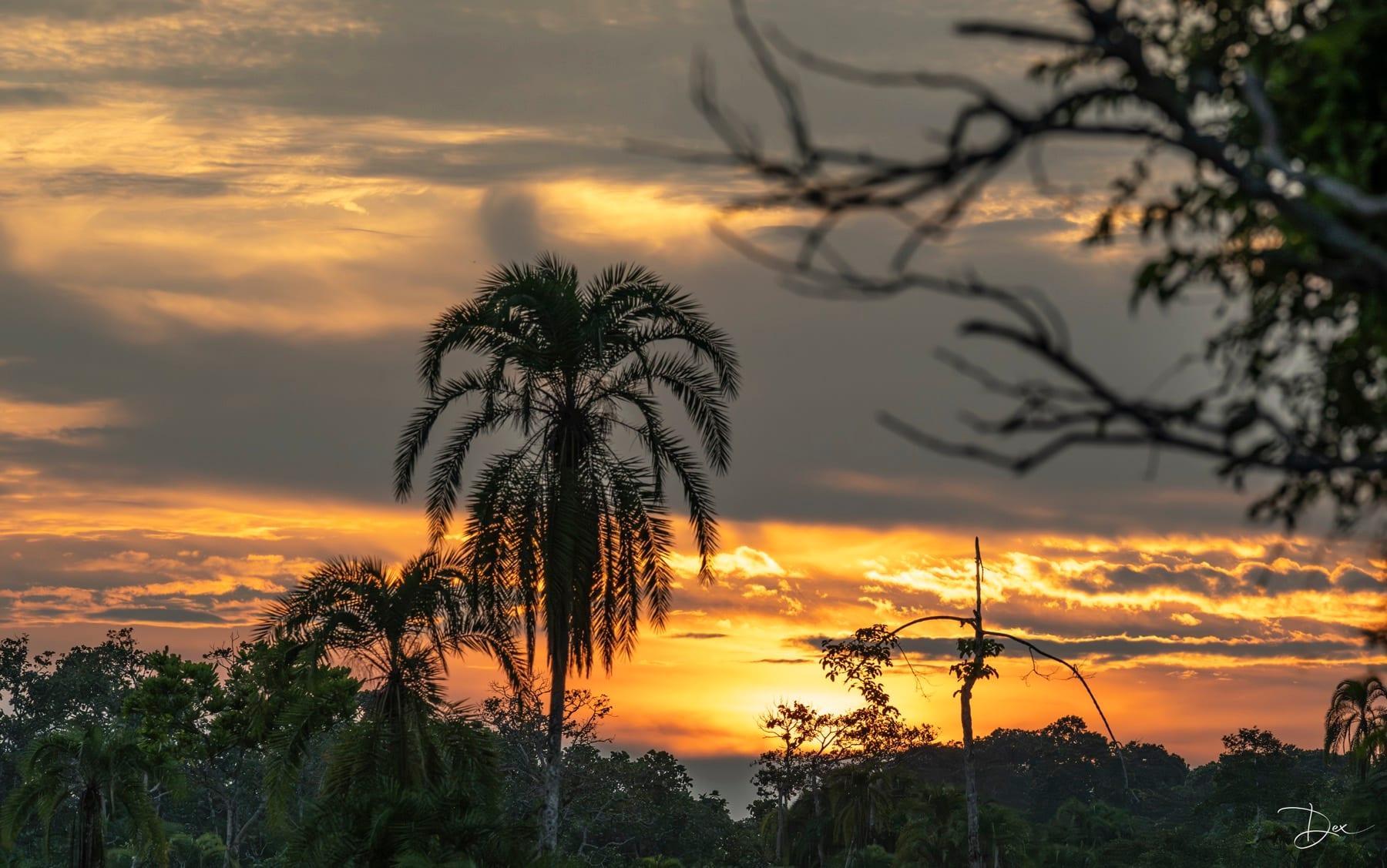
Our final stop, Mboko Camp, sits where the rainforest meets the Lekoli River. We arrive at camp via a raised boardwalk through the forest, to check in to comfortable chalets tucked beneath the trees. Waiting for us was one final surprise: our tailor had arrived with the bespoke outfits crafted from the vibrant fabrics we'd chosen back in Brazzaville. Trying them on in the middle of the Congo Basin felt like the perfect full-circle moment.
The Lekoli River became the heartbeat of our days whilst at Mboko. Broad, glassy and framed by lush gallery forest, it offers an entirely different perspective on the Congo Basin. We explored it by motor boat, where every bend revealed another surprise. Skittish forest elephants running for cover back into the forest, while forest buffalo grazed nearby with remarkable indifference to us and their giant neighbours. On one unforgettable afternoon, our guide Damien quietly slipped into the shallow water to guide our boat (we had cut the engine) closer, allowing us to watch an elephant cow and her calf from a respectful distance. With sundowners in hand, we sat in hushed silence as the family moved on the fringes of the bai, the golden light reflecting off the still water. It was one of those rare travel moments that requires no words.
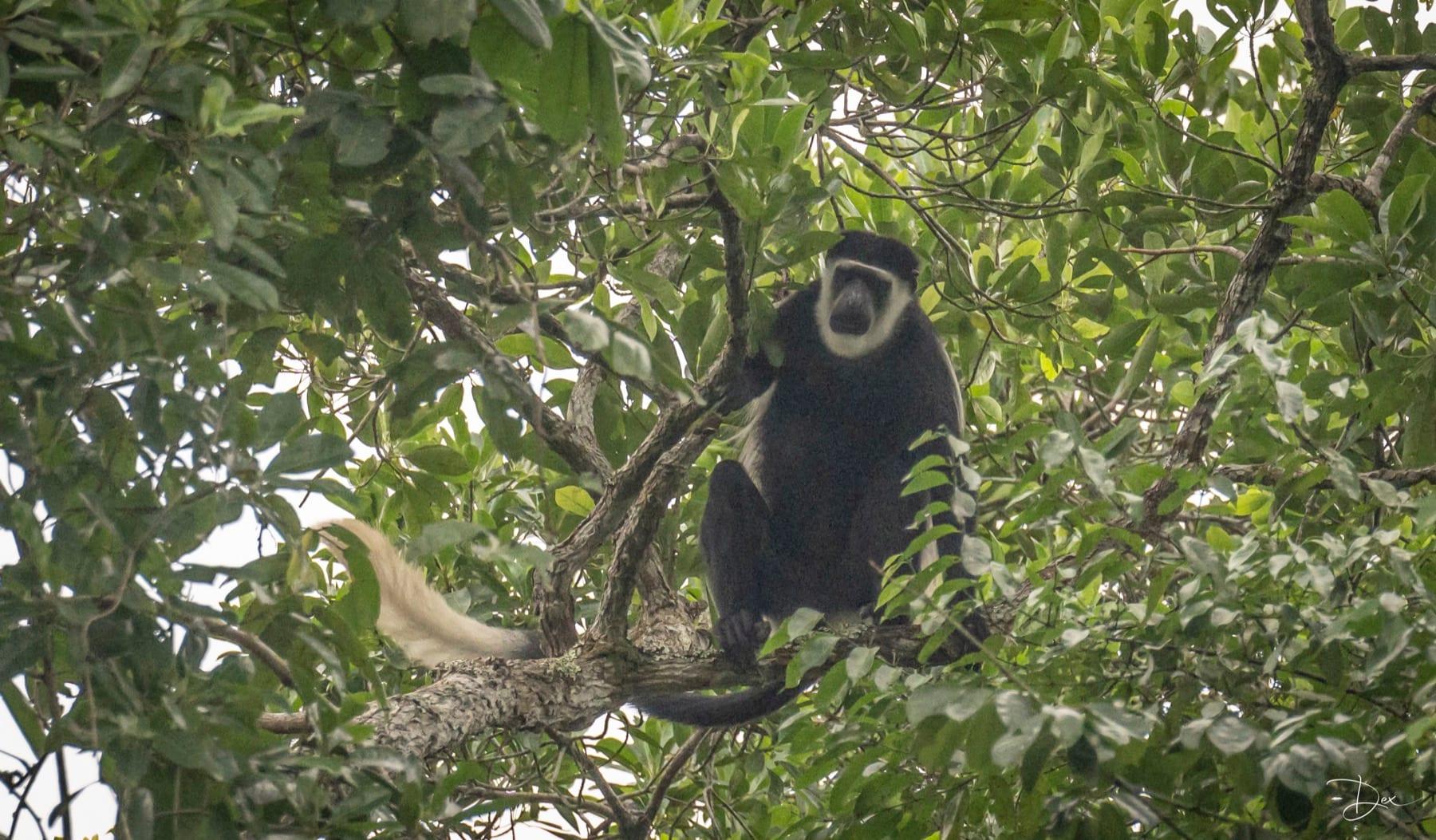
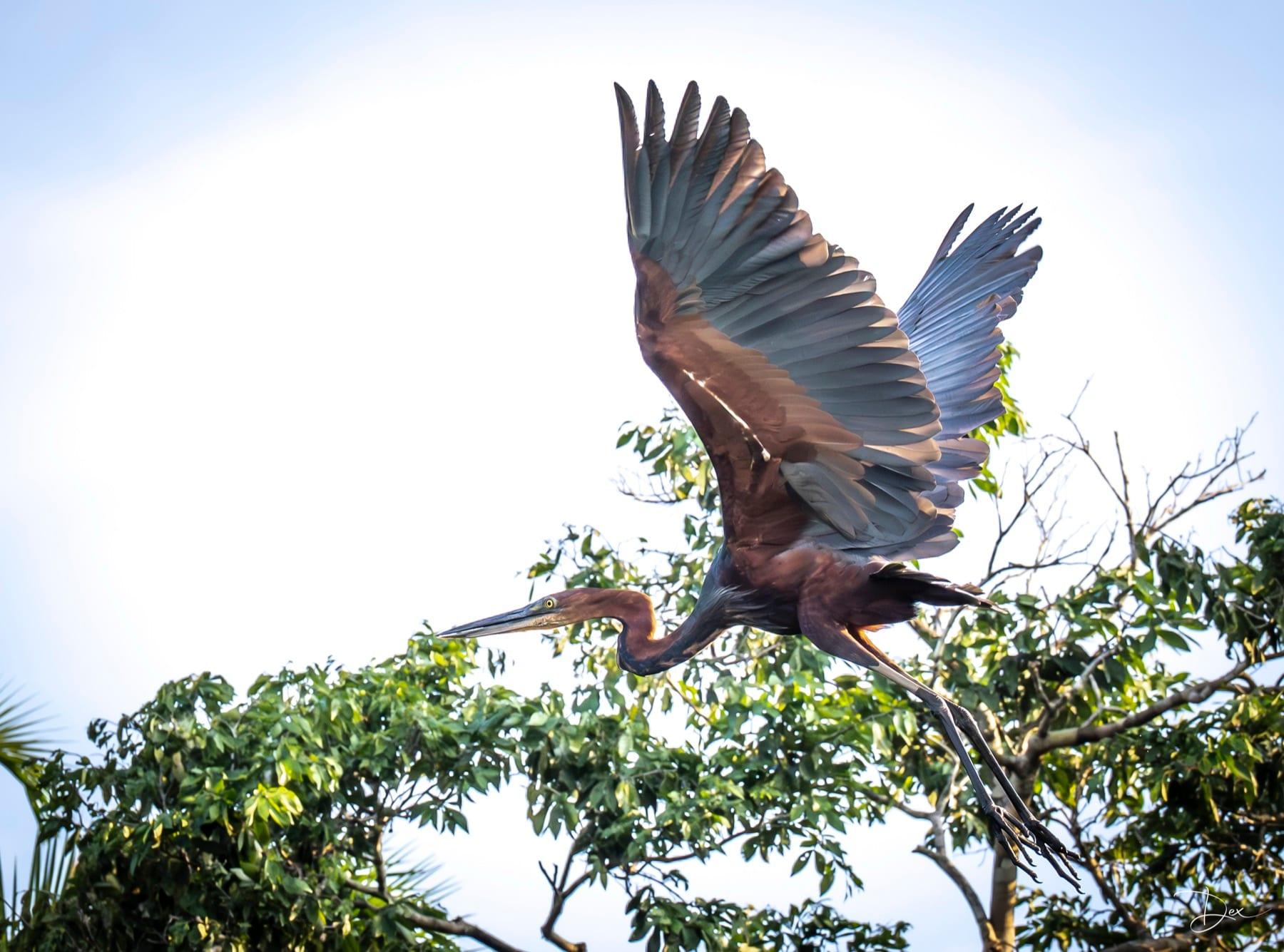
The waterways and forests surrounding Mboko teem with life. Slender-snouted crocodiles bask on low branches when the sun appears, while colourful kingfishers dart across the river and different primate species including black-and-white colobus, De Brazza's monkeys, putty-nosed monkeys and grey-cheeked mangabeys, regular appearances in the canopy above us.
One morning we followed the Lekoli river upstream on foot, through the cool riverine forest to a hidden hippo pool. Standing safely above the water's edge, we watched around fifteen hippos jostling below us, their enormous bodies appearing and disappearing beneath the surface. It was another reminder that this wilderness reveals itself only to those willing to slow down and look carefully.
Throughout our journey, guides William and Damien transformed every walk and boat excursion into a masterclass in rainforest ecology. Every tree, insect, bird call and animal track had a story. By the end of our stay, we realised that the true magic of the Congo Basin lies not only in its iconic wildlife, but in the intricate web of life that connects it all.
As our aircraft lifted off the following morning, carrying us back to Brazzaville above an endless sea of emerald forest, it was difficult not to feel changed by the experience. The Congo Basin is one of the world's last great wildernesses. Raw, remote and astonishingly rich. Few people will ever have the privilege of exploring it in this way, and that is precisely what makes it so unforgettable. It did not surprise me that William told us that we were 1 in 2000 guests in the World who had visited this area. What a privilege.
What You Should Know Before You Go
Long after the gorillas, elephants and rainforest have faded into memory, one fact remains impossible to ignore: the Congo Basin matters.
Stretching across six Central African countries, it is the world's second-largest tropical rainforest after the Amazon, storing billions of tonnes of carbon, regulating regional rainfall and providing a lifeline for countless communities. Yet, despite its global importance, it remains one of the least-visited wildernesses on Earth.
Nowhere is that more evident than in Odzala-Kokoua National Park. Covering more than 13,500 square kilometres of pristine rainforest, rivers and mineral-rich forest clearings known as bais, the park is one of Africa's greatest conservation success stories. These remarkable clearings act as natural gathering places, drawing wildlife from miles around to replenish vital minerals unavailable in the surrounding forest.
For many visitors, the greatest privilege is encountering the African forest elephant. Smaller, darker and more elusive than its savanna cousin, it is now listed as Critically Endangered, having lost more than 80% of its population in recent decades through ivory poaching and habitat loss. Odzala is one of the species' last remaining strongholds.
The park is equally important for the Critically Endangered western lowland gorilla, whose healthy population has made carefully managed gorilla trekking possible while directly funding research, veterinary care and anti-poaching efforts. Beyond these flagship species, the rainforest shelters central chimpanzees, giant pangolins, leopards, forest buffalo, slender-snouted crocodiles and spectacular birdlife, including the unmistakable African grey parrot.
What makes a journey here so remarkable is that conservation is not an afterthought. It is the experience itself. Much of Odzala-Kokoua National Park's remarkable recovery is thanks to African Parks, which has managed the park in partnership with the Republic of Congo since 2010. Through rigorous wildlife protection, community partnerships and scientific research, it has helped safeguard one of Africa's most important rainforest ecosystems. Kamba African Rainforest Experiences works within this conservation model, ensuring that every visit directly supports the long term protection of this extraordinary wilderness.
In a world where truly wild places are becoming increasingly rare, the Republic of Congo offers something precious: the chance to experience Africa as it once was. Quietly, respectfully and with very little fanfare, Kamba is ensuring it remains that way for generations to come.